
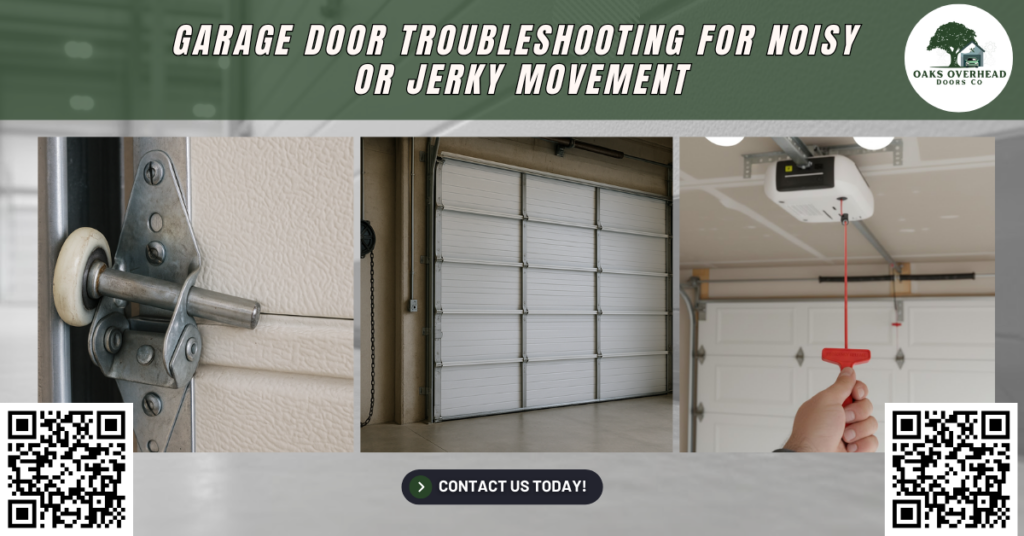
Garage door troubleshooting starts the moment you notice something feels off, especially when your garage door gets noisy or starts moving in a jerky, uneven way. If you live in Richmond, Texas, you already know our weather swings from hot and humid to sudden cold snaps, and that kind of change can make garage door parts expand, contract, dry out, or rust faster than you expect. At Oaks Overhead Doors Co., we have seen plenty of doors that went from smooth and quiet to loud and jumpy almost overnight, and most of the time, the cause is something fixable if you catch it early.
A while back, our trained technicians were called to a home near the Vineyard area in Richmond because the customer thought their opener was dying. The door sounded like metal scraping on metal, and every few inches, it would hesitate as if it hit an invisible wall. The homeowner had stopped using the door out of safety concerns for their car and their family. When we arrived, we found two simple issues: dry rollers and a loose hinge that had slowly shifted out of alignment. Ten minutes of inspection, cleaning, tightening, and lubrication turned the door back into a quiet, smooth system. The opener was perfectly fine. The real win was preventing a much bigger repair down the road, like a snapped spring or bent track.
Here is a stat that surprises a lot of homeowners: most garage door problems begin small, and many noisy or jerky movement complaints are connected to basic maintenance issues, not major failures. Think of a garage door system like a team of moving parts. If even one part is under extra tension, worn down, or slightly out of place, the whole door feels it. That is why troubleshooting is not just about stopping noise. It is about protecting your door, your garage, your home, and everyone who walks through that pedestrian door-sized opening every single day.
Why Noisy or Jerky Garage Door Movement Matters
A noisy or jerky garage door is more than an annoyance. It is a warning sign that something is not working the way it should. When the door shakes, rattles, grinds, or moves unevenly, it puts extra stress on important parts like springs, cables, rollers, tracks, and the opener. Over time, that stress can shorten the lifetime of your entire system.
In residential homes and even in a busy parking garage or commercial garage setting, safety comes first. A door that moves in a jerky way can slip off track, slam shut, or fail when you need it most. That is why Oaks Overhead Doors Co. always recommends taking noise and movement changes seriously instead of “waiting to see if it gets better.”
How a Garage Door Should Move When Everything Is Healthy
A healthy garage door should open and close with steady speed and smooth operation. You might hear a low motor hum, a small rolling sound from the rollers, and a soft click at the start and stop. What you should not hear is banging, squealing, grinding, popping, loud noises like a gunshot, or a repeated clunking that shakes the garage.
The door should also stay level. If one side rises faster than the other, or if the door pauses mid-travel, those are clear signs of imbalance, track issues, or tension problems.
Quick Safety Rule Before You Troubleshoot
Before doing any checks, keep safety in mind:
- Stay clear of high-tension components like torsion springs and extension springs. These are dangerous without proper tools and training.
- Do not remove bolts on spring systems yourself.
- If the door is stuck halfway, do not force it using the opener.
- Keep children and pets away from the garage door system while inspecting.
If anything looks bent, snapped, or heavily damaged, stop and call professional garage door repair right away.
Common Causes of Noisy or Jerky Garage Doors
Let us walk through the biggest troublemakers we see in Richmond, TX.
Worn or Dry Rollers
Rollers guide the door along the tracks. Over time, rollers wear out or dry out, especially in humid Texas air. Worn rollers can cause squeaks, rattles, or the jerky movement that feels like the door “hops” as it rolls.
What to look for:
- Rollers that look cracked, chipped, or wobbling
- Loud rolling or scraping noise
- Door shaking as it travels
Fix you can do:
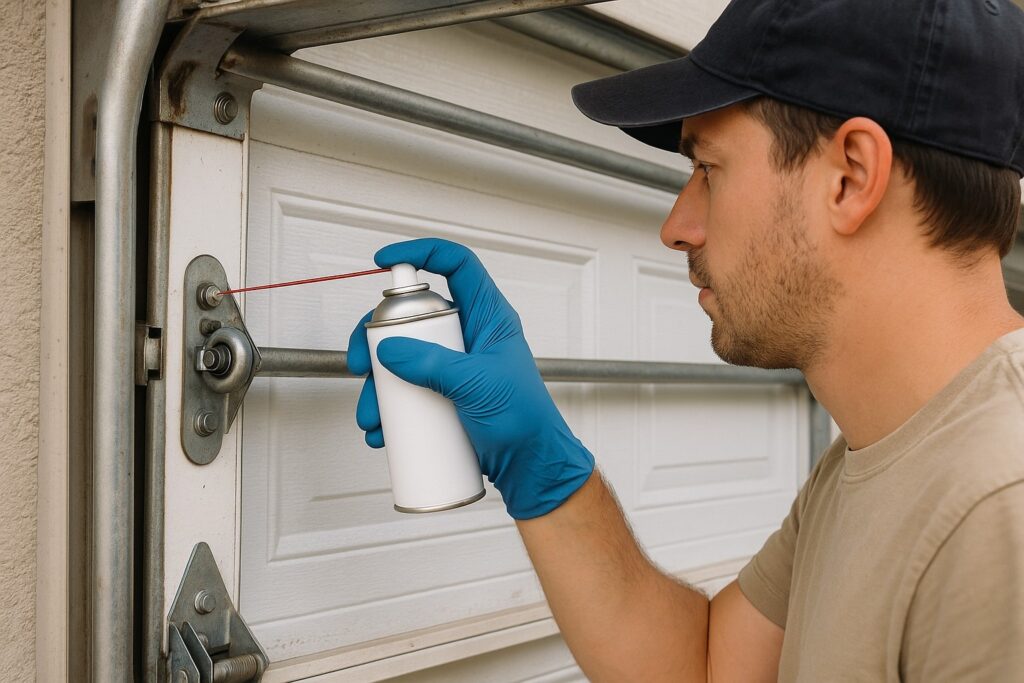
Lubricate rollers with garage door safe lubricant. Avoid thick grease because it holds dust. If rollers are badly worn, replacement is best left to expert technicians.
Loose Hardware and Hinges
Every time your door opens, vibrations travel through hinges, brackets, lag screws, and bolts. Over the years, hardware can loosen. Loose hinges shift door panels and cause uneven movement.
What to look for:
- Rattling sounds
- Visible gaps near hinges
- Door panels are flexing oddly
Fix you can do:
Use a wrench or socket to snug hardware. Do not overtighten. If hinges are bent, call a garage door service provider.
Track Misalignment or Track Damage
Tracks guide the door. If they are bent, dirty, or misaligned, your door cannot glide smoothly.
What to look for:
- Tracks are pulling away from the wall
- Dents, bends, or rust
- Grinding or scraping along one side
Fix you can do:
Clean tracks using a dry cloth. Do not lubricate tracks. If the track is bent or out of alignment, let a trained technician handle it because track repair affects safety sensors and balance.
Dirty or Misplaced Safety Sensors
Modern garage door openers have safety sensors near the bottom. If they are dirty or not aligned, the opener can hesitate, reverse, or cause jerky movement.
What to look for:
- Door starts closing, then reverses
- Blinking sensor lights
- Door pauses at random points
Fix you can do:
Wipe sensors clean and check that both lights are steady. Adjust lightly if they are bumped.
Spring Problems
Broken springs or tired springs are a top cause of jerky lifting. Springs carry most of the door weight. If one spring is weak, the opener struggles, and the door may rise unevenly.
What to look for:
- Loud bang from the garage (often a spring snapping)
- Door feels heavy
- Door rises crookedly
- Gaps in a torsion spring coil
Fix you should not do alone:
Spring replacement requires professional installation. A DIY attempt can cause serious injury.
Opener Strain or Malfunctioning Opener
Your garage door opener should not pull a door that is out of balance. If parts wear down, the opener may jerk or stutter.
What to look for:
- Motor hums, but the door barely moves
- Chain or belt slapping noise
- Door movement is slow then sudden
Fix you can do:
Check opener settings and the drive system. If the opener is older or shows signs of damage, call a professional.
Cables and Drums Wearing Out
Cables support the door lift. If they fray or slip, the door may jerk or tilt.
What to look for:
- Frayed cable strands
- Door lifting unevenly
- Cable hanging loose
Fix:
Cable replacement is another high-tension repair. Call expert technicians.
Step-by-Step Garage Door Troubleshooting Checklist
Here is a simple guide a homeowner can follow safely.
Step 1: Listen Closely
Open and close the door once and pay attention.
- Is the noise at the start, middle, or end?
- Is it squealing, banging, or grinding?
Different sounds point to different parts.
Step 2: Inspect Rollers and Hinges
Stand inside the garage with the door closed. Look along the tracks and rollers.
- Do rollers spin freely?
- Are the hinges tight?
- Any obvious damage?
Step 3: Check Track Condition
Look for dents or crooked sections.
- Measure if tracks are level.
- Look for debris or rust.
Step 4: Test Door Balance
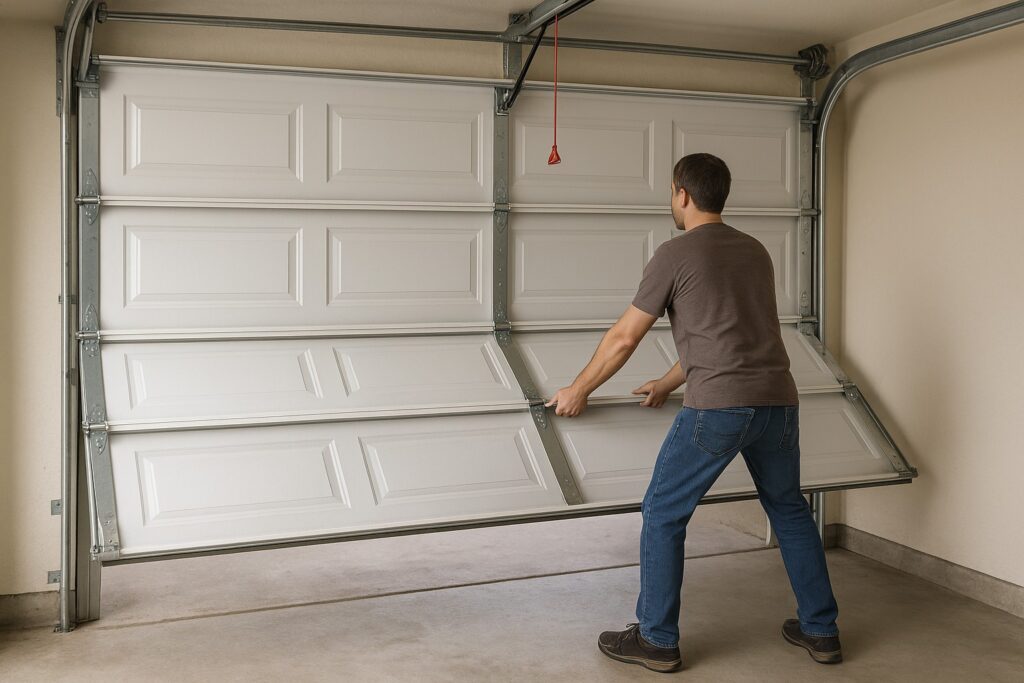
Pull the emergency release cord to disconnect the opener. Lift the door halfway by hand.
- If it stays in place, balance is good.
- If it drops or rises fast, springs may be failing.
Reconnect the opener afterward.
Step 5: Clean and Lubricate Key Moving Parts
Lubricate these parts:
- Rollers
- Hinges
- Springs (light coat)
- Bearings
- Opener chain or screw drive if required
Do not lube tracks or sensors.
Step 6: Repeat the Test
Operate the door again. If noise and jerky movement are gone, you likely solved a minor maintenance issue. If not, move to professional help.
Troubleshooting By Sound: What Each Noise Usually Means
Squealing or screeching: often dry rollers or hinges.
Grinding: track issue or worn rollers.
Banging: loose hardware or spring tension shift.
Popping: spring coils, binding, or door sections shifting.
Rattling: loose bolts or brackets.
Clicking then stopping: sensor or opener logic problem.
Treat these as clues. You are basically doing a “search” through your door’s symptoms like a moderator on a forum, sorting out what is going wrong. Oaks Overhead Doors Co. does this every day, and it is how we find the root cause quickly.
When DIY Garage Door Troubleshooting Is Not Enough
You should stop and call a professional garage door repair if:
- You see a broken spring
- Cables are frayed or off the drum
- Tracks are badly bent
- The door is off track
- The opener smokes, sparks, or smells burned
- The door slams shut or feels unsafe
These are not “minor issues.” They require trained technicians, exact tools, and careful handling.
Preventative Maintenance to Avoid Noisy or Jerky Doors
Most homeowners do not want surprises. Preventive care keeps your garage door reliable.
Monthly Visual Check
Take five minutes a month to look at:
- Rollers
- Tracks
- Hinges
- Cables
- Springs
- Opener mounting
Seasonal Lubrication
Texas heat dries parts faster. Lube twice a year.
This simple step can save you costly repairs.
Annual Professional Tune-Up Services
A tune up includes balance testing, safety sensor checks, tightening, and inspection. Oaks Overhead Doors Co. often catches issues early before they become emergencies.
Real World Example From Richmond, TX
A family near High Desert-style developments called us because their door made a loud rumble and shook hard on cold mornings. The opener was only three years old, so they were confused. Our inspection found that the bottom seal had stiffened from temperature swings, and the door was scraping slightly on one side because of track drift. We adjusted alignment, replaced the worn seal, and lubricated rollers. The result was smooth operation even during colder weather. That is why local garage door knowledge matters. Richmond weather is unique, and so are the wear patterns we see here.
Commercial and Residential Doors Have Different Stress Points
If you run a business with a commercial garage door or manage a parking garage, your system sees heavier cycles and higher downtime costs. Commercial doors often need stronger springs, thicker tracks, and more frequent inspections. Residential garage doors may face less daily use, but still need regular maintenance.
Oaks Overhead Doors Co. provides services for both, and we follow building code standards, including safety rules similar to what an inspector or Mr. Inspector might check during a property review. Meeting code requirements protects your people and your property.
A Note on Parts Quality and Energy Efficiency
Sometimes noise comes from cheap or worn parts. Using high-quality parts improves performance and lifetime. It also supports energy efficiency, since a well-sealed door reduces drafts. Some newer doors even align with EnergyStar-style insulation benefits. In Richmond summers, this can lower energy bills by keeping air and heat out of the garage.
Frequently Asked Questions (FAQs)
1. Are nylon rollers really quieter than steel rollers, and are they worth upgrading to?
Yes, nylon rollers usually reduce rattling and vibration compared to steel, which can make the door feel smoother and quieter. They also resist rust better in humid areas like Richmond, TX, so many homeowners find the upgrade worthwhile.
2. Can the type of garage door material affect how noisy it gets over time?
Absolutely. Heavier doors, like solid wood or insulated steel, can create more vibration if hardware loosens, while lighter doors may amplify rattles from tracks and rollers. Material does not cause the problem by itself, but it can change how noise shows up.
3. What do opener blinking lights or error codes usually mean when movement is jerky?
Most openers use blinking patterns to signal issues like sensor misalignment, travel limit problems, or motor strain. Checking your opener manual can point you to the specific code, but repeated error signals often mean the system needs a professional diagnostic.
4. Does homeowner’s insurance cover sudden garage door failures like spring breakage?
Sometimes, but it depends on your policy and the cause. Insurance may help if the failure is tied to a covered event like a storm or impact damage, but normal wear and tear usually is not covered.
Final Thoughts
Noisy or jerky movement is your garage door’s way of asking for help. The good news is that many issues are small at first, like dry rollers, loose hinges, or dirty sensors. With safe steps like inspection, tightening, cleaning, and lubrication, you can often restore smooth operation.
But you should never take risks with high-tension parts such as springs and cables. When the problem involves balance, broken springs, bent tracks, or opener strain, professional garage door service is the right move. The earlier you act, the more you protect your door system, your home, and your budget.
At Oaks Overhead Doors Co., we believe every homeowner and business deserves reliable garage doors, clear answers, and repairs done the right way. Our community of customers keeps Richmond thriving, and we are grateful for every call, every “thanks,” and every chance to support our neighbors with honest work. Whether you are a bronze member of the homeowner world doing basic upkeep, or a lifetime sawhorse-level DIY fan who loves learning, we are here as a trusted resource when things go beyond a simple fix.
How Can Oaks Overhead Doors Co. Help You?
If your garage door is still noisy, shaking, or moving in a jerky way after basic garage door troubleshooting, let our expert technicians take it from there. Oaks Overhead Doors Co. is a trusted local garage door company serving Richmond, TX, and surrounding areas with reliable installation, repair, and maintenance for both residential and commercial doors.
We handle everything from broken springs and cable replacement to track realignment, opener repair, safety sensor troubleshooting, and full system tune-ups. Our trained team arrives with the right tools, deep experience, and a focus on safe, efficient resolution. We do not guess. We inspect, find the root cause, and fix the problem correctly the first time.
Contact Oaks Overhead Doors Co. today for fast, friendly service and a free quote.
Address: 7119 FM 1464, Richmond, TX 77407
Phone: (281) 572-5318
Let us bring back quiet, smooth, dependable operation to your garage door system so your home or business stays safe, secure, and stress-free.